
Comprehensive Guide to Foundation, Framing, and Final Home Inspection Steps
Phase inspections are critical components of the construction process, ensuring that each stage of building meets safety and quality standards. This comprehensive guide will delve into the various phases of construction inspections, focusing on foundation, framing, and final inspections. It’s beneficial to learn about the importance of these inspections, how they prevent costly repairs, and the specific checklists involved in each phase. Many homeowners and builders face challenges in maintaining compliance with building codes and ensuring structural integrity. By understanding the inspection process, stakeholders can mitigate risks and enhance the overall quality of construction projects. This article will cover the significance of construction inspection phases, detailed checklists for foundation inspections, the framing inspection process, final inspection steps, and how to effectively schedule these services in Texas.
What Are Construction Inspection Phases and Why Are They Important?
Construction inspection phases are systematic evaluations conducted at various stages of a building project to ensure compliance with safety standards and local building codes. These inspections are crucial for identifying potential issues early in the construction process, which can save time and money by preventing costly repairs later on. By adhering to these inspection phases, builders and homeowners can ensure that their projects meet all necessary regulations and standards, ultimately leading to safer and more durable structures.
Effective quality assurance and control at each phase helps ensure that construction work aligns with approved plans and standards. These practices are essential for maintaining the structural integrity and longevity of any building.
Importance of Quality Assurance & Control in Construction Projects
Quality Assurance (QA) and Quality Control (QC) are essential for the successful completion of any construction project. The project manager or general contractor is primarily responsible for ensuring that construction follows the approved designs and that QA/QC procedures are properly administered.
- Quality Assurance (QA): Planning and systematic measures to prevent defects.
- Quality Control (QC): Identifying and correcting defects during construction.
Together, these processes help guarantee that a project meets safety, durability, and code compliance standards.
How Do Phase Inspections Prevent Costly Repairs?
Phase inspections prevent costly repairs by identifying potential problems before they escalate. For example:
- Foundation inspections can reveal cracks, settling, or improper reinforcement early, allowing timely remediation.
- Framing inspections can detect misaligned structural components, incorrect installation of load-bearing elements, or issues with mechanical, electrical, and plumbing (MEP) rough-ins.
A proactive approach ensures deficiencies are addressed promptly, saving money and avoiding significant damage to the property.
Who Should Schedule Phase Inspections in North Texas?
Phase inspections should be scheduled by various stakeholders involved in the construction process, including:
- Homebuyers – Gain assurance that the property meets building codes and is free from significant defects.
- Sellers – Enhance property marketability through documented inspection reports.
- Real estate agents – Advise clients on inspections to protect their investments.
- Builders or general contractors – Ensure ongoing compliance with local building codes and industry standards.
What Is Included in a Foundation Inspection Checklist?
A foundation inspection checklist typically includes:
Which Common Defects Does a Foundation Inspection Detect?
Foundation inspections can detect:
- Cracks in concrete or masonry
- Uneven settling or shifting
- Poorly installed reinforcement
- Inadequate drainage or waterproofing
Identifying these defects early allows for timely repairs, reducing long-term costs and safety risks.
When Should Foundation Inspections Be Scheduled During Construction?
Recommended inspection points:
- Pre-pour inspection – Before concrete is poured, to assess site preparation and formwork.
- Post-pour inspection – After the foundation is set, evaluate reinforcement, leveling, and curing.
- Final foundation inspection – Part of the overall final inspection to ensure compliance with building codes.
How Does the Framing Inspection Process Ensure Structural Integrity?
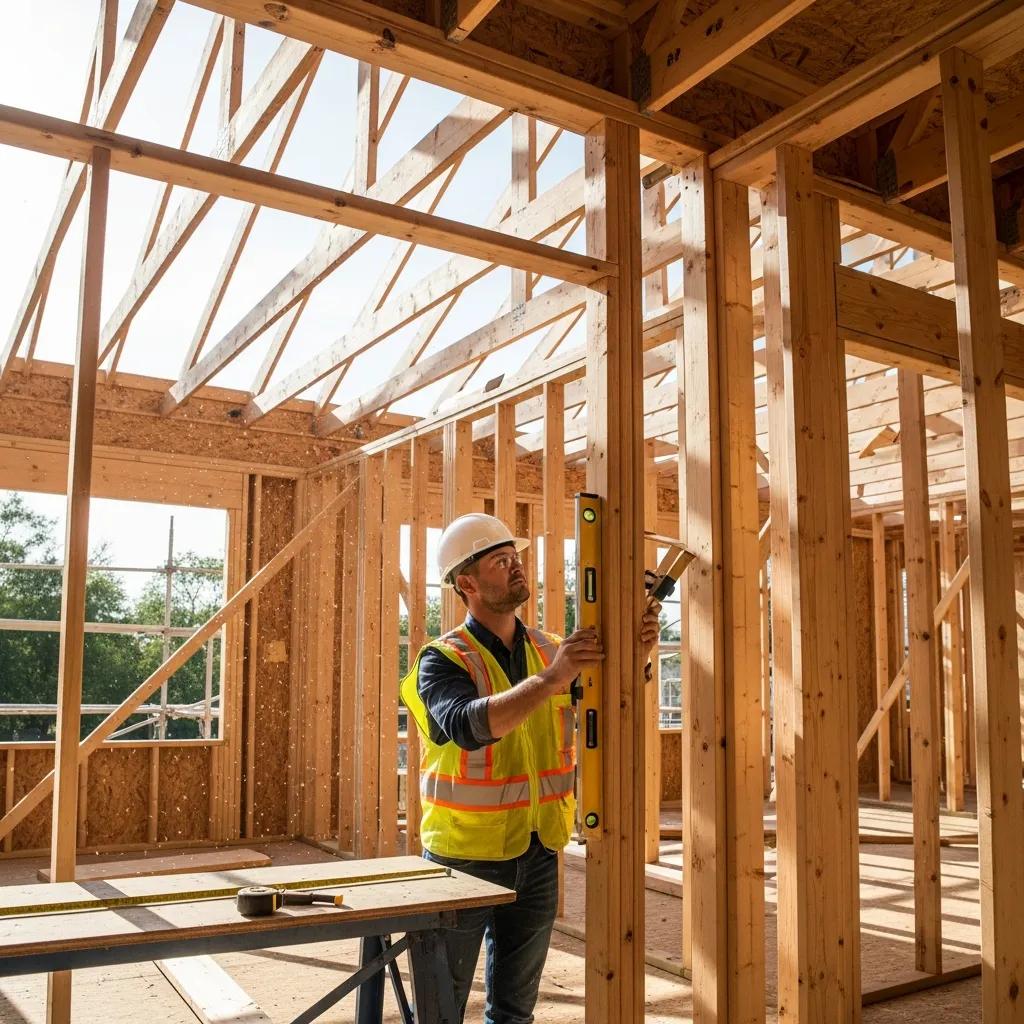
Inspector checking framing alignment for structural integrity at construction site
Framing inspections evaluate walls, floors, and roof structures to confirm they follow approved plans and specifications. Inspectors check:
- Alignment and spacing of structural members
- Installation of load-bearing walls and beams
- Proper rough-in of mechanical, electrical, and plumbing (MEP) systems
- Weatherproofing measures such as house wrap and flashing
- Fireblocking and structural connectors (hangers, bolts, straps)
Proper framing inspections ensure that the building’s structure is safe, stable, and compliant with local codes.
How Does Framing Inspection Comply with Building Codes?
Framing inspections verify that all structural components meet local building codes designed to protect occupants’ safety. Compliance helps prevent structural failures, ensures legal adherence, and reduces liability for builders and homeowners.
What Are the Final Home Inspection Steps Before Project Completion?
The final home inspection ensures that the completed construction meets all standards. Key steps include:
- Conducting a thorough walk-through with homeowners
- Verifying that electrical, plumbing, HVAC, and other systems function correctly
- Ensuring structural integrity, safety features, and insulation compliance
- Documenting any remaining defects or items requiring correction
How Does the Final Inspection Verify Building Code Compliance?
Inspectors compare the completed project with approved plans and local building codes. Any issues must be addressed before occupancy. This ensures the home is safe, functional, and ready for residents.
What Common Issues Are Identified During Final Inspections?
Common problems include:
- Missing or incomplete fixtures
- Leaky roofs or flashing
- Insufficient insulation
- Improperly finished surfaces
Addressing these issues before moving in protects homeowners and ensures building safety.
How to Schedule and Prepare for Building Phase Inspection Services in Texas?
Homeowners and builders should:
- Contact inspection services and provide project details
- Discuss specific inspection needs
- Ensure construction areas are accessible and ready for inspection
Proper preparation ensures inspections are efficient and thorough.
What Should Clients Expect in Inspection Reports from Kissee Inspection Services?
Clients receive detailed reports including:
- Findings and observations
- Recommendations for repairs or corrections
- Photographs documenting any issues
These reports serve as a permanent record for homeowners and builders, helping track property condition and necessary actions.
How to Request Quotes and Schedule Phase Inspections Efficiently?
- Contact Kissee Inspection Services directly with project details
- Provide personal and property information
- Schedule inspections in a timely manner to keep construction timelines on track
Frequently Asked Questions About Phase Inspections
What Happens During Each Phase Inspection?
A qualified inspector:
- Assesses completed work against approved plans
- Conducts visual inspections of structural and system components
- Documents findings and recommends corrective actions if necessary
What Happens During Each Phase Inspection?
A qualified inspector:
- Assesses completed work against approved plans
- Conducts visual inspections of structural and system components
- Documents findings and recommends corrective actions if necessary
How Do Early Phase Inspections Reduce Construction Risks?
Early inspections identify potential issues before they escalate, ensuring:
- Compliance with building codes and standards
- Prevention of major problems that could result in costly repairs
- Improved overall safety and project quality
Using detailed checklists and systematic evaluations helps mitigate risks and ensures a smooth construction process.