
Why the First Phase Matters Most
A foundation cannot be corrected once concrete is poured—making the pre-foundation inspection one of the most critical stages in the construction process.
Hire a professional!
Before concrete is poured, this phase confirms that the site has been properly prepared and that the foundation will meet structural and code requirements. Because the foundation supports the entire structure, errors at this stage can result in structural movement, foundation cracking, drainage problems, and expensive long-term repairs.
This article explains what is evaluated, when inspections should be scheduled, and why this first phase plays a vital role in the success of any construction project in Texas. Learn more about Kissee Inspection Services on our About page.
What Is Included in a Pre-Foundation Inspection?
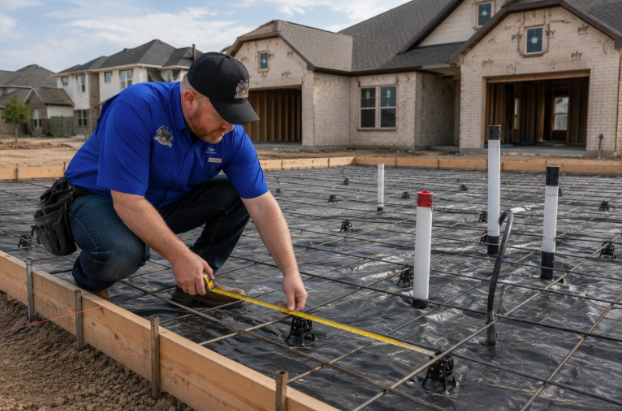
A pre-foundation inspection—commonly referred to as a pre-pour inspection—is conducted after site preparation and reinforcement installation but before concrete placement. Its purpose is to verify that the foundation setup complies with engineering plans and local building codes.
During this inspection, a qualified, licensed professional inspector WITH Construction experience is crucial. Kissee Inspections has this experience – not all companies are the same.
The inspector evaluates soil preparation, drainage planning, reinforcement layout, and overall site readiness. Once concrete is poured, these structural components are no longer visible.
Key Components of the Foundation Inspection Checklist
A comprehensive pre-foundation inspection checklist typically includes the following:
Soil Preparation & Compaction
The inspector verifies that the soil has been properly graded and compacted to support the foundation. Inadequate compaction can lead to uneven settling and structural cracks over time.
Drainage & Site Grading
Proper site grading ensures water drains away from the foundation. Poor drainage can contribute to soil erosion, moisture intrusion, and foundation movement—especially in areas with expansive soils like North Texas.
Formwork Installation
Forms must be secure, level, and aligned according to approved plans. Incorrect formwork can affect slab thickness and overall foundation dimensions.
Rebar Placement & Reinforcement
Reinforcing steel (rebar) must be correctly sized, spaced, and secured according to engineering specifications. Proper reinforcement is essential for load distribution and crack control.
Utility Penetrations & Vapor Barriers
Plumbing lines, sleeves, and vapor barriers must be correctly positioned before concrete placement. Misalignment at this stage can create structural or moisture-related problems later.
Addressing these elements before concrete is poured significantly reduces the risk of structural failure and future foundation repairs.
How Pre-Pour Concrete Inspection Ensures Structural Compliance
A pre-pour inspection confirms that the foundation assembly complies with approved construction plans and local building codes prior to concrete placement.
Inspectors typically verify:
- Correct rebar size and spacing
- Secure tying and proper positioning of reinforcement
- Accurate footing depth and layout
- Stable and aligned formwork
- Proper site measurements and structural dimensions
Because these components become concealed once concrete is poured, verifying compliance at this stage is essential for long-term safety, durability, and code adherence.
When Should You Schedule a Pre-Pour Foundation Inspection?
Timing is critical. A pre-pour inspection should be scheduled after site preparation and reinforcement installation are complete, but before concrete is placed.
Optimal Timing in the Foundation Phase Inspection Process
The best time to schedule the inspection is immediately before the planned concrete pour. This allows sufficient time to correct any deficiencies while keeping the project on schedule.
Impact of Early Inspections on Construction Outcomes
Early inspections help:
- Prevent structural deficiencies
- Reduce the likelihood of foundation movement
- Avoid delays from failed municipal inspections
- Improve overall build quality and long-term performance
Correcting problems before concrete placement is significantly more efficient and cost-effective than attempting repairs after construction progresses.
How Much Does a Foundation Inspection Cost in Texas?
Foundation inspection costs vary depending on property size, foundation type, and project complexity. Pricing may differ between residential and commercial projects.
A foundation inspection should be viewed as an investment in the property, not simply an added expense. The cost of identifying a potential construction concern before concrete is poured can be small compared with the potential cost and disruption of discovering and addressing a significant problem later in the construction process.
Factors Influencing Foundation Inspection Services Pricing
- Property Size: Larger properties may require more detailed evaluation and time on site.
- Foundation Type: Slab-on-grade, pier-and-beam, and deep foundation systems require different inspection approaches.
- Soil Conditions: Expansive soils common in North Texas may require additional attention during inspection.
- Additional Services: Engineering consultations, soil testing, or expanded documentation may affect final pricing.
Give us a call via our homepage to get a personalized quote.
Why Are Pre-Foundation Inspections Critical for Homebuyers and Property Owners?
Pre-foundation inspections are especially important in Texas, where soil movement can significantly affect foundation stability. Expansive clay soils can expand and contract with moisture changes, increasing stress on foundations.
Ensuring proper site preparation and reinforcement before concrete placement helps protect against these risks.
Detecting Common Foundation Defects Early
Pre-foundation inspections can identify:
- Improper soil compaction
- Inadequate drainage planning
- Incorrect rebar spacing or placement
- Misaligned formwork
- Poor grading around the slab
Addressing these issues before concrete placement helps maintain the long-term performance and structural integrity of the foundation.
Ensuring Compliance with Local Building Codes
Compliance with local building codes is necessary to pass municipal inspections and move forward with construction. A pre-foundation inspection helps confirm that work meets safety and engineering standards before progressing to the next phase.
For homebuyers, this early verification provides added assurance that the property is being constructed correctly from the ground up. Visit our About page to learn about Kissee Inspection Services and our commitment to quality inspections.
Conclusion
Pre-foundation inspections establish the structural groundwork for a safe and durable building. By verifying soil preparation, reinforcement placement, drainage planning, and code compliance before concrete is poured, this phase helps protect the entire structure.
For property owners and homebuyers, scheduling a pre-foundation inspection is a proactive step toward reducing risk, preventing future foundation problems, and ensuring long-term structural stability.
Starting with a properly inspected foundation is not just best practice—it is a critical step in achieving a successful construction project. Explore our New Construction Inspection Services to schedule your pre-foundation inspection today.
Take the next step in protecting your investment. CALL THE PROFESSIONALS at Kissee Inspection Services today at 469.789.1444 to schedule your pre-foundation inspection.