

What to Expect During Your Home Inspection: A Complete Guide for Buyers and Sellers
Why Is a Septic System Inspection Essential for Homeowners?
What Are the Benefits of Septic Inspections for Homebuyers and Sellers?
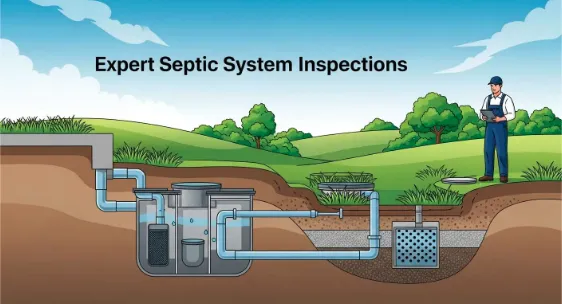
What Does a Complete Septic System Inspection Include?
| Component | What is checked | Typical signs of concern |
|---|---|---|
| Septic Tank | Structural integrity, baffles, scum, and sludge levels | Cracks, missing baffles, and solids overload |
| Inlet/Outlet Pipes | Flow, blockages, corrosion | Slow flow, backups, visible damage |
| Distribution Box | Even distribution, structural soundness | Uneven flow, collapsed sections |
| Drain Field (leach lines) | Saturation, vegetation patterns, and soil conditions | Pooling, lush patches, surfacing effluent |
| Pumps & Alarms | Functionality, float operation, and electrical integrity | Failures to start, stuck floats, frequent cycling |
Which Septic System Components Are Inspected?
What Advanced Techniques Are Used in Septic Inspections?
What Are the Common Signs of Septic System Failure?
- Slow Drains in Multiple Fixtures: When several drains are sluggish, the system or main line is likely impaired rather than a single fixture clog.
- Foul Sewage Odors Outdoors or Indoors: Persistent smells near the drain field or inside the home often indicate surfacing effluent or venting issues.
- Pooling Water or Lush Vegetation Over Drain Field: Saturated soil or unusually green patches frequently signal percolation failure and effluent surfacing.
- Gurgling Sounds and Backups: Unusual noises and occasional backups point to venting or flow disruptions requiring prompt inspection.
How to Identify Warning Signs Like Slow Drains and Foul Odors?

What Should Homeowners Do When They Notice Septic Problems?
Understanding Septic System Inspection Types and Factors
| Inspection Type | When it’s appropriate |
|---|---|
| Routine Maintenance Review | Regular homeowner checks, no transaction involved |
| Pre-purchase / Real-estate Inspection | Property transfer, buyer due diligence |
| Camera-based or Diagnostic Inspection | Suspected blockages, non-visible line issues, may be included in pre-purchase inspections, depending on the scope |
| Pump/System Functional Test | Systems with mechanical pumps or alarms |
What Factors Influence Septic Inspection Scope and Planning?
- System Age and Records: Provide construction age, past pumping dates, and any repair history to help the inspector plan the time and tests needed.
- Visible Symptoms and Photos: Share recent photos of pooling, odors, or access points to clarify whether advanced diagnostics are likely necessary.
- Accessibility Notes: Describe landscaping, fencing, or buried lids that might affect access and time on site.
How to Get a Tailored Estimate for Your Septic Inspection?
How Often Should You Schedule Septic System Inspections?
| System Age / Condition | Recommended inspection frequency | Rationale |
|---|---|---|
| Less than 20 years, no issues | Every 3 years | Preventative monitoring per EPA guidance |
| More than 20-year-old systems | Annually | Elevated risk of component wear and soil degradation |
| Systems with pumps/alarms | Annually or per manufacturer | Mechanical components require more frequent checks |
| After major events (sale, flooding) | As needed / before transfer | Verify the condition before the transaction or after the stress |
What are the EPA and Texas Recommendations for Inspection Frequency?
When Is More Frequent Inspection Necessary?
- More frequent inspection is necessary if a system has a history of backups, frequent alarms, persistent wet spots, or if household usage increases significantly—these conditions accelerate wear and can overwhelm treatment capacity.
- After heavy rains or flooding, or immediately before and after property transfer, an inspection verifies that soil percolation and tank function were not compromised by event stresses.
- Systems showing gradual performance decline, such as recurring clogs or slow drains across multiple fixtures, should be monitored more closely to prevent major failures. Regular monitoring based on these triggers helps homeowners intervene sooner and avoid costly replacement.